2026.04.23 | 1:30PM
@International Conference Hall
2026 Demo Day embraces “Artistry in Alliance -- where collaboration becomes the craft of innovation”.
In an era of complexity, creation is no longer individual. It is shaped through alliances. True innovation emerges when platforms, partners, and intelligent technologies come together to co‑create, compose, and evolve. Through LITEON+, enterprises, industry partners, and startups form a living alliance. Resources are woven together, expertise is layered and refined, and ideas move beyond sketches to be collaboratively crafted into solutions that take form and move forward.
The event also highlights human-machine co-creation. When human insight and decision‑making work alongside data, algorithms, and intelligent systems, innovation becomes more adaptive and impactful. Machines act as collaborative partners, supporting iteration, optimization, and accelerated outcomes. This Demo Day is more than a showcase—it is where startups, technologies, and people unite to co-create the future.
We invite you to immerse yourself in the boundless innovative power that only collaboration can unlock.

13:30
14:05
14:15
15:15
15:30
16:00
16:15
17:30
LITEON+ is a startup platform established by LITEON Technology in 2023, aimed at providing various support resources for promising startups. It collaborates with LITEON business units for proof of concept (PoC) and proof of business (PoB) and helps connect with the global supply chain. Additionally, LITEON+ offers abundant resources, including an open and vibrant office environment—X-site, and the Unicorn University, which invites industry experts to share their experiences. The platform also closely collaborates with domestic and international enterprises, venture capital, and accelerator platforms, providing comprehensive support for startup teams. LITEON+ is not only a promoter of innovation and technology but also a solid backing for the growth of startups.
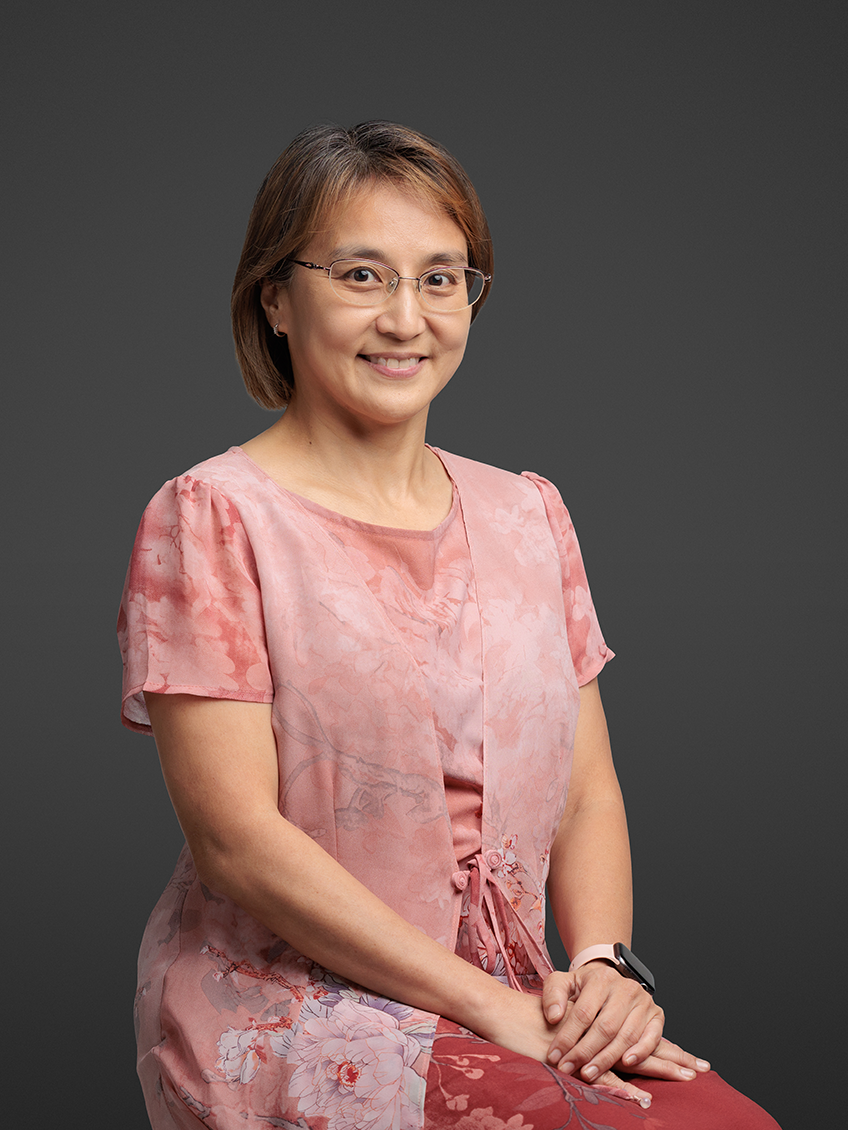
Professor Yow Wei Quin is Head of the Humanities, Arts, and Social Sciences cluster and Programme Director of the Design and Artificial Intelligence (DAI) undergraduate programme at the Singapore University of Technology and Design (SUTD). She holds a PhD and MA in Psychology and an MSc in Statistics from Stanford University. Her research examines the societal, cognitive, and ethical implications of technology across the lifespan, with a focus on aging and bilingualism. She is actively involved in national research governance, contributing to evidence-based and ethically grounded technology and public policy development.


AI Inference for the Extreme Edge
CEO
Sam leads femtoAI and is a recognized thoughtleader in edge AI, invited to speak at conferences, join panels, and giveinterviews on the future of on-device intelligence. His fascination with thebrain — nature's most energy-efficient computing hardware — led him to co-foundfemtoAI in 2018.
- PhDin Electrical Engineering, Stanford University, Stanford’s Brains in Silicon Lab
- B.S.in Electrical and Biomedical Engineering, Washington University in St. Louis
CTO
Alex leads the hardware team designing the silicon at the heart of femtoAI's platform. Additionally, he is the inventor on 6 patents whose research forms the direct foundation of femtoAI's sparse processing unit.
- PhD in Electrical Engineering, Stanford University, Stanford's Brains in Silicon Lab
- B.S. in Electrical and Computer Engineering, Northwestern University
Chief AI Officer
Scott leads AI model and software development at femtoAI and is at the forefront of audio ML research, with work spanning µW-scale spoken language understanding, AI-powered speech enhancement, and the compiler toolchain that deploys optimized models to the extreme edge.
- M.S. in Electrical Engineering, Stanford University
- B.S. in Physics, Stanford University
- Research focus: neuromorphic algorithm design at Stanford’s Brains in Silicon Lab
Today’s AI models are designed for data centers, making them unsuitable for constrained devices like earbuds, smart glasses, industrial sensors, and robotics. For device makers, limits in power, silicon area, and latency often force reliance on the cloud or prevent AI use altogether. femtoAI provides a full-stack solution to enable AI directly on even the smallest devices.
The Sparse Processing Unit (SPU) delivers 100× lower power consumption, 10× smaller silicon footprint, and 10× lower latency than conventional inference solutions. It is powered by a Dual Sparsity Engine that exploits both activation and parameter sparsity, skipping unnecessary computations and storing only essential parameters, inspired by neuromorphic principles.
On top of the SPU, the system includes a toolchain that compiles and optimizes models directly for the hardware, along with a library of ready-to-deploy models for edge use cases such as speech enhancement, offline voice commands, and anomaly detection. Hardware–software co-design further amplifies overall efficiency.
femtoAI measures success by its customers' success. With $18.7M in booked revenue, the near-term focus is clear: get more customers to production, grow units shipped past 1 million SPUs, and help device makers add meaningful AI capability to their products.
Growth comes from two directions: deepening existing customer relationships through supply agreements, and expanding into new ones across target verticals. A key marker of that partnership value is the growing number of customer products proudly shipping using the "with femtoAI" branding.

Powering Next Generation AI Data Center Infrastructure
CEO & Co-founder
Leads Skycore’s strategy, business development, and commercialization efforts. Pere combines a strong technology background with commercial leadership to bring next-generation power solutions to the AI data center market. He focuses on building strategic partnerships across the semiconductor and data center ecosystem while driving market entry and global expansion.
- PhD in Electrical Engineering, Technical University of Denmark (DTU).
CTO & Co-founder
Drives the company’s technology innovation, inventions, and growing patent portfolio. Dennis has deep expertise in power integrated circuit design and power electronics across multiple fields, with experience spanning both industry and academic research. He advances the development of Skycore’s core technology concepts and intellectual property, shaping the company’s long-term positioning.
- PhD in Electrical Engineering, Technical University of Denmark (DTU), completed in collaboration with GN Hearing.
VP of Engineering & Co-founder
Leads engineering execution across power solution development, IC design, and productization, leveraging deep expertise in semiconductor and power electronics to drive the transition from advanced architectures to scalable, manufacturable data center solutions for next-generation.
PhD in Electrical Engineering from the National Institute of Applied Sciences (INSA) Lyon, completed in collaboration with STMicroelectronics.
Head of Hardware & Verification, Co-founder
Leads hardware development and verification of Skycore’s power solutions, with strong expertise in system verification, power electronics for high-performance, power-dense applications, focusing on robust system integration and reliable validation across diverse environments.
AI data centers are hitting the limits of 54V power delivery as rack power exceeds 200 kW, driving a shift to 800V HVDC architectures for greater efficiency and power density. This transition imposes stringent requirements on power electronics, including high density, compact form factors, low profile, and ultra-high efficiency. Skycore addresses these challenges with custom power IC-based solutions designed for next-generation AI data center infrastructure.
Skycore develops advanced power solutions for 800V HVDC data center architectures, centered on power converter designs co-developed with specialized power ICs to enable highly efficient, compact conversion. This approach directly addresses the extreme constraints of HVDC infrastructure by delivering very high-power density, a compact footprint, low profile, and high efficiency, while their modular platform enables scalable power solutions across voltage and power levels for the rapidly growing demands of AI infrastructure.
Founded in Denmark in 2021, Skycore develops advanced power solutions for next-generation AI data center infrastructure. The company has raised €7.5M, including a €5M seed round in late 2025. It has built a validated platform combining advanced converter architectures with specialized power ICs and has established an IP portfolio of 8 patent families that continues to grow. Following the seed round, the company is expanding its team, actively engaging with strategic partners and potential customers across the data center ecosystem, and advancing toward commercial market entry.
.svg)
Energy Aware Intellifence from Edge to Cloud
Founder
GP Singh (Gajendra Prasad Singh) is a seasoned tech professional with over 26 years of experience in advanced semiconductor chips. Driven by a passion for solving complex technical problems, he set out to develop programmable AI microprocessors that deliver high performance with low power consumption and cost efficiency, leading him to found Ambient Scientific with a team from California’s Silicon Valley. His experience building cutting‑edge chips at leading global companies combines first‑principles technical insight with the business judgment required for practical deployment. Deeply passionate about electronics and computers, GP Singh advocates the use of semiconductors to improve human lives.
The rapid advancement of AI is colliding with a fundamental hardware wall as both cloud and edge systems brute-force next-generation neural networks through legacy architectures built for graphics and sequential logic. This mismatch creates a massive “energy tax,” where moving data costs more power than computing it. Ambient Scientific is addressing this foundational AI energy crisis by redesigning the processor from the ground up to deliver a native AI architecture that dramatically reduces power consumption and breaks the bottleneck wherever compute happens.
Ambient Scientific tackles the AI energy crisis by abandoning legacy architectures and rebuilding the processor specifically for neural networks. Our innovations remove the massive “energy tax” of traditional computing through four core breakthroughs:
DigAn® Architecture: We fuse the energy efficiency of analog computing with the reliability and scalability of digital systems, delivering high AI performance at a fraction of the power.
Analog In-Memory Compute: We overcome the Von Neumann bottleneck by performing matrix math directly where data resides, eliminating constant, power-hungry data movement across the chip.
SenseMesh™: A dedicated hardware layer fuses up to 28 simultaneous sensors in an ultra-low-power “subconscious” mode, processing complex environments without waking the main control core.
Uncompromised Programmability: A unified software stack preserves the developer experience, enabling seamless deployment via industry-standard frameworks such as TensorFlow and ONNX.
Together, these breakthroughs shift AI from brute-force hardware scaling to natively efficient, sustainable compute.
The product has recently entered mass production and is projected to ship 1 million units in 2026. Several Tier 1 OEM partnerships are in progress, including one of the world’s largest telecom companies and one of the largest wearable companies. The next processor GPX64, designed to deliver 200 TOPS of AI performance at 10× lower power than GPUs, is already in development and targets drones, robotics, and other “Physical AI” markets.

Empowering Brilliant Minds with AI to Solve Critical Challenges and Shape a Better Future.
Founder
Nai-Hsiang Wang is the founder of Tricuss, focused on AI-driven research automation and industrial innovation. He builds AI platforms that integrate machine learning, statistical modeling, and domain knowledge for enterprise R&D. At Tricuss, he leads the Co-Research AI Agent platform, which accelerates innovation and reshapes how research and engineering teams operate.
Industrial R&D processes are often slow, costly, and highly dependent on human expertise. Engineers manually design experiments, run simulations, analyze results, and compile reports. Knowledge is often scattered across documents and individuals, making it difficult to accumulate and reuse insights. Tricuss addresses this by introducing AI agents that assist and partially automate the research workflow, from data analysis and experiment design to insight discovery and reporting, enabling faster and more scalable innovation.
Tricuss develops a Co-Research AI Agent platform that combines large language models, statistical learning, and physics-based simulation. The system assists with experiment design (DoE), simulation analysis, and research insight generation. By integrating Physics-based Digital Twin technology with AI reasoning, the platform enables faster virtual experimentation and reduces the need for physical experiments. The AI agents can also analyze academic papers and enterprise data to identify root causes and generate research-grade reports, turning fragmented data into reusable R&D knowledge assets.
Actively working with enterprise partners in semiconductor and advanced manufacturing to deploy an AI research platform, with multiple proof‑of‑concept projects in process optimization, simulation analysis, and predictive maintenance. Early deployments show analysis cycles reduced from weeks to minutes, with fewer required experiments and improved knowledge reuse.

Powering Intelligence at the Edge
CEO
- An industry leader, highly experienced and successful in semiconductor business
- Current CEO of Gwanak Analog
- Former President, Tektronix (Japan & Korea), Texas Instruments (Korea), ON Semiconductor (Korea & SE Asia), Intersil (ASIA)
Current smart home appliances relying on cloud AI face latency, privacy risks, and high power consumption. Conversely, existing edge chips are often too bulky or power-hungry for compact devices. We solve this by processing multi-sensor data entirely locally, eliminating server dependency while drastically minimizing power and device footprint.
Our ultra-low-power On-Device AI product acts as an advanced Sensor Hub to enable true "Physical AI." While featuring built-in voice capabilities (TTS/KWS), its core breakthrough is seamlessly integrating analog and digital signal processing. Leveraging our extensive ROIC and diverse sensor development expertise, it aggregates complex data directly at the edge through a highly efficient, DRAM-free architecture.
This solution will drive rapid market penetration by transforming standard home appliances into intelligent, offline-capable devices. By lowering system costs and maximizing energy efficiency, we anticipate unlocking new, customized smart home applications, dominating a niche untouched by conventional high-power AI chips.

Redefining Thermal Imaging
CEO & Co-Founder
Co‑Founder and CEO of Obsidian Sensors, focused on commercializing disruptive thermal imaging technology, bringing over 39 years of R&D leadership and industrial experience. His career includes scaling complex hardware and sensor technologies across leading organizations, including Rockwell International, where he led photonics and MEMS R&D and received “Engineer of the Year” honors. As the venture‑backed founder of Acelo Semiconductor, he developed 40 Gbit/sec modulator drivers. Prior to founding Obsidian in 2017, he served as Chief Technologist at NASA’s Jet Propulsion Laboratory (JPL) and as VP of Technology at Qualcomm, where he was General Manager of the MEMS Technologies division and led the second‑generation Mirasol low‑power reflective display.
- B.S., MIT
- Ph.D., Caltech (Optical Computing and Neural Networks); visiting professor at Caltech and UCSD, holding 58 U.S. patents and over 100 publications, bridging deep-tech innovation and market-ready products.
COO & Co-Founder
Co‑Founder of Obsidian Sensors, leading the development of disruptive thermal imaging technology with over 40 years of experience in nonlinear optics, MEMS, and advanced sensor systems. Previously led research at Rockwell Science Center, engineered precision optical metrology at NASA JPL, and founded Chromux Technologies, generating $2M in annual revenue. He also held senior technical leadership roles at Qualcomm, Auxora, and Teledyne Scientific, including leading the Mirasol display division and the pivot to microbolometers on glass.
- B.S., EECS, UC Berkeley
- Ph.D., Electrical Engineering, USC
High Cost and Lack of Manufacturing Scale
Using LAMP (Large Area MEMS Platform) technology, complex MEMS devices can be fabricated on glass at orders‑of‑magnitude lower cost than silicon, fundamentally changing the cost and scale of uncooled microbolometers. The platform supports large‑area substrates 20–22× larger than silicon wafers, enabling production scale increases of 100× or more. VGA thermal cameras are currently shipping, with sensor module costs approximately one‑tenth of silicon‑based alternatives and higher‑resolution formats planned (SVGA in 2026, SXGA in 2027).
The manufacturing line was established and the world’s first uncooled VGA thermal camera based on a microbolometer on glass was launched in late 2024 using the LAMP process. Deliveries exceeded 1,500 units in 2025, with the 2026 pipeline growing beyond 10× driven by drone demand. The dual‑use technology supports market expansion across commercial automotive, security, and military UxS applications.

Lottevont is a Taiwanese artist based in the Netherlands. Lottevont fuses nature, data, and fashion language through generative AI to create cohesive, high-impact aesthetic frameworks. A Google Gemini Art Remix winner and one of Leonardo AI’s Top 50 Women AI Filmmakers 2026, her creations have been exhibited at the Rijksmuseum and across major installations - including 3,000 LED billboards in the Netherlands and 10-meter LED walls in Taipei. By exploring the "co-existence" between nature, tech, and humanity, she delivers innovative visual content as an official creative partner for various international Generative AI platforms.
